Sunday, 22 February 2015

QUESTION SEVEN - Evaluation

Question seven - Looking back at your preliminary task, what do you feel you have learnt in the progression from it to the full product?

The purpose of a preliminary task was to learn how to use the equipment e.g. camera and tripod and get an aspect on what it would be like to film an 2 minute opening sequence. I had to familiarise myself with the camera, tripod, memory card and most importantly my group members; Hannah and Oliver. This was our first task as a group, so from this we could also see as a group who was good at what and what they would take the role of in the process of our opening sequence.

This was our first use of the camera and tripod as a group and each had our own knowledgeable aspects of them. The preliminary task was to create a short clip, including five uses of cinematography, these were zooming in, zooming out, over the shoulder shot, panning shot and close up. All of these had to be captured using the tripod. For this task myself and Hannah took the roles of the actors and Oliver took the role of being director of photography. Oliver had the main role of using these, although along the way we helped each other in capturing the right height of the scene and the things included.
Learning how to produce these uses of cinematography meant I had a head start for when creating my thriller opening sequence, and was knowledgeable on how to produce each one smoothly and well. Furthermore, the preliminary task also meant we could re-take as many times as we liked, meaning more practise using the camera and tripod.
As a group we discovered that the director or photography needs to have a lot of patience and control over the camera, and most importantly the actors.
The camera had a featured touch screen, this meant I and my group could watch back what we had recorded and discuss what needed and could have been improved, which I found worked very well, as we was honest with each other and meant we could all share our opinions.
The preliminary task also meant I had the first chance to use Final Cut Pro X, giving me a head start for when filming my thriller opening sequence. The first use on Final Cut Pro X allowed me to discover new editing skills and different uses of sound and colours I could use.

Overall, I believe that me and my group worked well in considering all the right research and skills we needed to learn and work together to create our thriller opening sequence.
My thriller opening production has benefited from this preliminary task and has ensured I reach the highest standard that I could have. This has helped attract my/our target audience and give them a reason to carry on watching my film, ensuring that they feel a high amount of emotion when watching.

QUESTION SIX - Evaluation

What have you learnt about technologies from the process of constructing this product?


This is a prezi which I have created answering question six.

QUESTION FIVE - Evaluation

Question Five


https://www.youtube.com/watch?v=Mkt4sMGE8UI


Media Youtube Evaluation Question five


QUESTION FOUR - Evaluation

Question four


Media Question four evaluation


A target audience is important when producing a media product as it helps as a guide of what  conventional aspects should be included and what is suitable for that age group. Aswell as this it is important as you can research different successful films within that genre with a similar target audience to see what would appeal to certain age groups and see what conventional elements they would expect to see.
 My thriller appeals to my target audience as we have used specific language to appeal to a target audience of 15+. This could be due to the narrative of our thriller film. The audience watching our product must have an interest and know what to expect in the genre, so this may appeal to them as we have included many generic aspects of a thriller film. In addition I think my thriller film appeals to the target audience as the they are a similar age to the characters, the audience will then build a relationship with this character as they will sympathise as they could imagine themselves in her position, also meaning 

Saturday, 21 February 2015

QUESTION THREE - Evaluation

Question three - What kind of media institution might distribute your media product and why?


This is the link to my prezi, answering question three.


https://prezi.com/lzntsokeq1mt/question-3-what-kind-of-media-institution-might-distribute-your-media-product-and-why/

QUESTION TWO - Evaluation

Question two - How does your media product represent particular social groups?


My thriller opening sequence involves two characters. The characters included are two a female victim and a male antagonist. The victim was chosen to be a female as they are portrayed as innocent and venerable on screen, creating a larger and quicker relationship between the audience and the victim. A female is seen to be stereotypical in a thriller film as females are frequently used as the victim as they are portrayed as weak and not having much power over anyone but themselves, whereas men are seen stereotypically as larger and muscly, and fit the role better as a antagonist, with strength and dominating power.
Gender in my opening sequence is represented in a stereotypical way as I have used generic conventions from previous thrillers which also use gender to gain a closer relationship with the audience. Gender is very important in a thriller film, as a wrong choice can mean not as much compassion and care is felt towards one character e.g. a male victim may be portrayed as strong and lean, completely defeating the object of an 'victim' being stereotypically seen as venerable and crying for help. 

The male antagonist doesn't show much of a character/personality to the audience, although the reason why he was used in my thriller opening sequence is because he played the character well, he was supposed to represent himself as tough, scary and intimidating, and this did work. Although no facial expressions could be used, his body language showed that he wasn't scared of anyone, and overpowering over his 'young female' victim. Furthermore, the female victim in my opening sequence was young and represented to the audience as venerable and innocent, again this is stereotypical but works well in so many ways in catching the audiences eye. The female victim was represented to be willing and innocent as she walks through a isolated setting (forest) in the dark on her own, something which the audience notice straight away, which helps support her character role, also walking through an isolated alley way. Furthermore, from watching other well-known thrillers for example; Lucy, taken 3, insidious ect, I found that women were seen to wear common colours in their outfits such as white and red as it shows their innocence or even showing to the audience that they will be the focus of attention of the antagonist. The female victim within my opening sequence is positioned in the centre of the camera, walking up to the opening field of the forest, this shows her innocence and not knowing what she is doing or what she is letting herself in for. The way the characters are positioned within the camera can depend on whether a relationship is created or not. Within my thriller opening sequence a relationship is created between the audience and the female victim. The way as a group we have worked together to discuss what she will do and where she will go/stand, has meant the audience feel sorry for her, and making them think that they can't wait for the next scene and want to watch more.

In thriller productions mise-en-scene is very important, as a younger audience want to see a lot of excitement on the screen involving the characters. Hannah, myself and Oliver all had the role of the mise-en-scene co-ordinator. One thing this role does involve is costumes. From research from the film 'Scream' it helped us come to light that costumes help add them final touches, and add to their role of what they are. In the film scream the antagonist is a male, and is seen to be wearing a mask and dark clothing. From comments from peers and the public and other resources I found that the target audience liked this, and found that the dark clothing helped to hide his identity more, and isolating him from all the other characters. From this research as a group we decided that we would use the same features, to catch our '15-25' age audience. The antagonist is portrayed to be wearing his mask and dark clothing throughout the whole sequence, again being stereotypical and conventional of a thriller film.

My target audience is aimed at the age group of 15-25. This is a very popular age group for thriller films, as these are the people it is enjoyed by the most, and take the most time to watch thriller films, after much research into this, this is what was decided. The characters discussed above have been chosen and used directly to capture this particular audience, which I found has worked well and having an overall basis of an target audience has allowed certain decisions to be made, helping the devolvement of the opening sequence.

Wednesday, 11 February 2015

QUESTION ONE - Evaluation

Introduction


My brief was to create a 2 minute thriller opening sequence, which included previous research and conventions from thriller films. I researched the thriller genre in various different ways which built up my knowledge of the industry, helping me to create new and different ideas for my opening sequence. For this opening sequence we were allocated groups and from this started discussing and sharing ideas straight away. This group consisted of myself, Hannah and Oliver. Before thinking about ideas for our thriller sequence, as a group we had to create a preliminary task. This consisted of a short scene including five different uses of cinematography. The five different uses of cinematography that we had to include was a long shot, close up, panning shot, reaction shot and over the shoulder shot. A preliminary task was our first trial using the camera, tripod and experimenting using these five uses of cinematography. This helped us gain an image of how easy/hard it was going to be to create a 2 minute opening sequence. 

Before our ideas were put together we decided on production roles, there were eight roles for each of us to take the place of. For us to decide we looked closely at who had the most knowledge and experience on each. The decisions were decided as a group; fairly and equally. Firstly for our producer, we chose to allocate each one of us, this being that we all had a large commitment into producing the opening sequence, and all had our own personal touches, also meaning that we could help each other on different aspects and sections so our thriller opening sequence would be to highest standard when completed. For our director we chose Hannah, the reason for this being is Hannah took Media at GCSE level so has a lot of knowledge and experience on directing others and taking the lead, which we as a group found helpful throughout as she has/gained good leadership skills and working with each one of us personally meant she pointed us In the right direction when taking the lead in one of our roles. After creating our preliminary task we found as a group that me and Oliver were the most talented and skilled at acting, which meant we gained the role each as an actor. At first we both found it hard to adjust to acting in a thriller opening sequence, but after much research and support from each other we both found it easier and learnt what uses of mise-en-scene (facial expressions etc.) were needed to work and add to a thriller film. The fourth production role was director of photography. After producing and analysing our preliminary task, we decided as a group that Hannah took on this role with the most power and dedication and the shots that she had taken in the preliminary task didn't need a lot of work doing to them, which we found was good, as she was now familiar with the camera itself and the settings, as well as being able to work and use the tripod appropriately. Her being able to know all this before the filming started meant we could start straight away with no delays, and reach a high standard/quality. Furthermore, for our music producer we as a group discussed and chose Oliver. Although music isn't put in the opening sequence until after the filming had all been completed, when filming Oliver had in mind what music could be used and completed his research before hand. We found this helped as when the editing stages approached Oliver was prepared, meaning he had more time to adjust the pitches and volumes as well as help me and Hannah if we needed any. Moreover, I was chosen to be our screen play writer, this meant researching fonts and colours for our opening scene credits. Again, the research was already done before hand as I analysed thriller films to see what particular fonts, sizes and shapes were used to add to the thriller effect. Credits are very important in an opening sequence so it was essential that they was in the right position on the screen in front of the right picture/scene. Second from last, we found it very hard to decide who would be our MES co-ordinator, so after mush discussion and questioning we decided that we would all take on the role. This meant we each got to choose/help decide each other's costumes, props and make-up. Although before we thought this may not work out, it was actually an advantage having three people take the role. This being that we all got an input in the decision making, also meaning that we had three different perspectives on each others look on scene, which helped as we could point advantages and disadvantages. And finally our last production role was the editor. This is an important role in production making so we had to conclude pros and cons. For this role as a group we decided that I would be the main editor, although with small amounts of input from my other group mates. The role of an editor is quite hard and requires a lot of work. I leant from this that research from other thriller opening sequences/films helps a lot as you gain skills and learn from other editors choices and decisions. Overall each production role meant we took on our own role and gave our own personal touches to create a group effort. I feel in my own opinion that we worked very well as a group, each putting in the greatest amount of effort that could have been inputted, which is why at the end of our opening sequence we was all very happy with the quality and the standard that it reached.

Question one - In what ways does your media product use, develop or challenge forms and conventions of real media products?

There are many generic conventions of a thriller film. Thriller films have been produced for years, each having its own individual story line and ideas, although all sharing similar features and conventions. There are many well-known generic conventions of a thriller that are very easily spotted/noticed in nearly every thriller film, these being; female victim, low-key lighting, weapon, protagonist, male antagonist, isolated setting, hidden identities, up beat sound effects, weather conditions e.g. thunder and lightening, raining, montage of shots, diagetic sounds e.g. breathing, tension music etc. There are many more, although these are the most conventional and the few I chose to analyse closely.
The successful thriller film which I have chosen to analyse is 'Scream'. Scream is a thriller which is well-known by nearly everyone. This successful thriller was made in 1996, and has been very popular ever since. I chose this film because from first watching, it was very noticeable to me that it held many generic conventions and that they worked well towards the audience. This film demonstrates use of a female victim used throughout, constructed around an isolated setting, also wearing a white top, portraying that she is innocent and vulnerable. This is shown in the film when the young innocent woman receives a phone call from an unknown caller. The use of a female victim in this film enlightened me to come forward with ideas about using a female victim in my opening sequence.  A female victim works well by intreging the audience and creating a close relationship between the two, as a female is portrayed as being more vulnerable than a male victim, especially is the female is young. Furthermore in this film 'scream' low key lighting is used throught which adds to the effect of an isolated setting, which is shown through the patio doors; showing a dark sky with surrounding trees and forest. This is shown also shown through the use of a panning shot.


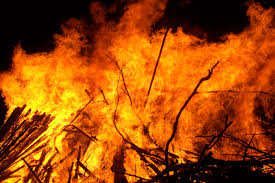
My film had the title of 'Obscurity' which was chosen as a group. The opening sequence starts with a black background and our production name written in a bright white writing. This clearly indicates to the audience that it is portraying good v bad, connecting to a conventional thriller narrative. Furthermore, the opening sequence then blurs threw to the next scene, showing fire burning, through the use of a close up shot. This close up shot means the audience and hear the sound of the crackling fire and bright orange flames burning in the face of the viewer/audience, also pot raying low-key lighting. Over the top of this picture/scene the first credit is shown to the audience, this states the first actor, although Is shown by the font being jagged, and the use of the colour; red. Red is a conventional colour linked to thriller films, which is why I and my group chose to use this in our opening sequence, as it adds to the suspense and helps lay information to the audience about what this thriller may involve. This font is used the whole way through the opening sequence. Moreover, a generic convention which is portrayed to the audience clearly is a hidden identity. Hidden identities are used frequently in thriller films, as they cover the true antagonist, which is why I chose to use this, the antagonist in my opening sequence is hidden the whole way through, leaving the audience wanting more and on the edge of their seats when it ends, helping the thriller become more exciting and intriguing. Furthermore, from research from the thriller 'Scream', I chose to include an isolated setting for most of the way through. The isolated setting used in my thriller opening sequence is a forest and enclosed area. This helps put the audience in the victims shoes feeling isolated and scared. Conventions are usually seen to only be things you can see on screen, but uses of cinematography such as close up shots and zooming in are frequently used in thriller films. Zooming in helps show the emotion on a victims face and there facial expression or may even to be zoom into an important item, for example a weapon. Close up shots were chosen to be used in my thriller. A close up allows the audience to see something important or intricate detail, the purpose for a close up in my opening sequence is to show the antagonists hidden identity; mask.
A female victim is also used within my opening sequence to show the innocence of the female, and create a sense that the audience will feel sorry for her walking through a alley on her own, also pot raying an isolated setting.As well as burning of pictures of young boys and girls, being burnt by the antagonist. Furthermore, a non-diagetic sound was also used in my opening sequence; rustling of leaves. This is conventional to a thriller as muffled sounds attract the audiences attention more and let them see what the noise is being made by. Lastly, a conventional sound track was played after the opening of the film. A voice slowly singing plays over the opening sequence, adding to the effects of what is being taken place on screen. For example when the picture of a young girl is being burnt shown through a close up and a creepy woman singing brings the effect that you should be scared of what is approaching the screen next. Generic conventions are very important to include in a thriller film as without them the audience would be intrigued and scared by what they see, conventions is what makes a thriller film, and is very important to use them not just in the opening sequence, but throughout the whole film.


Wednesday, 4 February 2015

FINAL GROUP THRILLER


https://www.youtube.com/watch?v=Nka6Xa7pTOs&feature=youtu.be


WEST HATCH HIGH SCHOOL - 16807
Ella Sawtell - 9363

I worked alongside with : Hannah Hobbs: 9338
Oliver Longshaw: 9351

Friday, 19 December 2014

ROUGH CUT - Miss Georgiou

ROUGH CUT


Audience feedback is important to a production because it helps us as a group identify the strengths and weaknesses of our opening sequence. Another reason why it is important is because we can then think about what is the most important parts we need to change and can help us plan when we will re do these.

Our group received various amount of feedback in various different ways.
We as a group screened our production to the class so we could receive feedback on what worked well and what improvements we needed to make. We received verbal feedback from the class and found this was very effective. We received feedback of our focus group which meant from ages of between 16-17, which was good for us as our opening sequence was rated at 15+. With this feedback it means that the target audience was hit and we would be receiving accurate feedback. We also received feedback from YouTube, this was after posting our opening sequence. Any member of the public could watch our post, like and comment, giving us as a group feedback. We found that all these ways were helpful for putting new ideas into our minds and highlighting to us what does not work so well and what does.

The public giving me and my group feedback meant there would be another set of eyes analysing the opening sequence and maybe seeing things that we don't. This also shows to us that one small change could make a large difference.

From all three ways of feedback we found that there was many positive amounts of feedback. The first main positive piece of feedback being the editing; the audience found this was very good and stood out. The editing was a huge part to our opening sequence and too get good feedback was great. The large amount of editing which we gained good feedback from was the section in the opening sequence where the mask appears. The lighting was just right for them to see the mask in a quick flash on the screen. However the music behind this section could have been bolder and louder, catching the audiences attention just a little bit more. When adding these filters we made sure that they were all in timing and were the right brightness and opacity so there was a constant flow throughout and you couldn't notice any small blips in the camera angles or that all the scenes were filmed on the same day. Another positive we received from screening our production is the amount of conventions of a thriller that were used, for example; low key lighting, female victim and hidden identity. The female victim meant there was more suspense and tension brought towards the audience and they found that a larger relationship was created between the two, which is what we intended to happen, and found as group from the feedback that we was happy and it was the right choice to make. Mine and my groups peers found that the low-key lighting left them waiting for more and in suspense about what was going to happen next, as not much evidence and clues were shown on screen. The class also liked the fact that the opening sequence was left on a cliff-hanger, from this they found that the concluding narrative was interesting and wasn't boring for them to watch. All of these main positive pieces of feedback has shown to my group that the story boards when planning was important and helped to maintain the good narrative that was noticed, as well as editing skills and conventions.


The main constructive feedback we received firstly was the title frame which was shown half way through the opening sequence. Me and my groups peers found that the title worked well and the music fitted in well, also blending in and out well to match the next up coming scene. Although some improvements could be made on the opening scene after the title, we as a group found that the lighting was quite dull and needed to stand out more to the audience, as well as adding some more dramatic music to show to the audience that the scene is concluding soon. Although apart from this, us as a group were happy with the ending scenes. The feedback about the opening credits we received was varied, although as a whole we received feedback that they wasn't on screen long enough and were just a little too small to read quick enough, although we had already discussed this as a group and were happy and conclusive with the feedback given. 

When receiving comments and feedback, positive feedback is useful and helpful to as it has given our group an insight of what elements do not need any additional changes and why they have helped to make our production successful. We have taken these comments from both the screening of our production and the comments left on the YouTube video that we uploaded of our thriller opening sequence rough cut. Firstly our feedback suggested that our transitions were well selected, in the way it wasn't too obvious that we were transitioning into the next scene and swiftly changed into the next scene keeping it professional looking. Another comment made was the fact it was clear in what our narrative was. I personally think we spent alot of our time making sure it was clear for the audience to understand the order of our thriller and what the narrative was, so this feedback was very helpful showing that our work in trying to reach this has worked. Another positive comment from our feedback from our YouTube video was that the sounds that we ended up using on our opening sequence, which were many overlapped created a good effect. 

The changes we make to our thriller opening sequence will be based on the comments and amounts of feedback given, we will make sure all pieces of feedback are taken into consideration are taken and changes in places we as a group feel is right. We will change the font sizes throughout and think more closely about our music; changes in the right places e.g. more dramatic and concluding music will need to be used. Overall asking for feedback from varied places has helped us see from different perspectives, looking from a different point of view on what does and doesn't work well.


Friday, 5 December 2014

PRODUCTION ROLES - Miss Miller

PRODUCTION ROLES

  • Each person must have a role allocated to them
  • To explain why they've been given this specific role
  • Evaluation of how they did in this role (what went well, could have gone better) and why
People need to be allocated specific roles when creating a film as it enables every member of the production to contribute especially towards one area, making every member of the production team to have a significant role in production. The main roles that are necessary for creating a film consists of;

Producers - Hannah, Ollie, Ella
Directors - Hannah
Actors - Ollie & Ella
Director of photography - Hannah
Music Producers - Ollie
Screen play writer - Ella
MES Co-ordinator - Hannah, Ella, Ollie
Editors - Ella

Deciding on production roles before we start filming our opening sequence will help us stay on track and help prevent any mistakes when filming. For each eight roles we have at least one person, our first role is producer. A Producer a person responsible for the financial and managerial aspects of the making of a film or broadcast or for staging a play. A producer helps to prepare the whole film, including the narrative. When planning we all decided and contributed on our narrative, so we was all happy with the final ending decision. We decided that every person in our group ( me, hannah, ollie) will all be a producer, this is because we all put input into what we are going to include in our opening sequence and how it will work well. All of our input has worked better than just one person being a producer this is because we worked together well and came up with better ideas on how and what to film, we had weekly discussions had produced our opening scene together as a team. A Producer is the most important job in film making and we came to the decision that we are all important in our group. We have all planned our own ideas for editing, music and mise-en-scene and this all comes under being a good producer. If we selected one person from our group to be the producer then this may has caused friction between the group as the decisions haven't been made together and discussed properly, i found that in my own opinion because neither me or my group members had been a producer in any production before, working as a team worked best as we learnt of each other and took it in turns to take the lead, this way it was fair.

The second role of producing a film is a director. film director is a person who directs the making of a film. Directing is a large part in film making and without the director nothing would really take place. As a group we decided to make Hannah the director. We chose to do this as she took media at GCSE and was a director here. She has learnt all the techniques and is good at taking charge of situations. Her role as a director means that is the boss of the film and has to direct everyone in the right direction. Her skills will help us explore new ways into creating a better thriller films and add different touches to any other normal thriller. As a director Hannah will be in charge of nearly everything in the scene, e.g. deciding on whether the shot taken looks right and needs to be taken again, this will help us with the best possible outcome and engage with the audience well. After our first day of filming I found that Hannah was a good director and gave clear specific instructions on what do to. I found that this helped as we didn't miss any of the scenes out and each scene we filmed was filmed well with good structure. Hannah made sure the background scene usable and worked well with the atmosphere we wanted to create. In my opinion I found that Hannah didn't do anything wrong, the planning before hand helped us to move on faster and not forget about anything that needed to be included, although after a group discussion we found that Hannah needed to come to conclusions about finalising scenes before, and not make new decisions In the middle of filming, we found that this wasn't a large issue but did cause a little concern at the start of our filming.

The actors in our opening sequence was myself (Ella) and Ollie.
An actor is a person whose profession is acting on the stage, in films, or on television. We as a group have chosen to use two actors for our filming. Our first actor is ollie, who is playing two parts in our opening sequence, he is going to be the antagonist aswell as a victim. His role as a antagonist will mean he will have a different personality than to the victim. His role as a antagonist means his personality will be very masculine and tough. As an actor ollie will have to use his acting skills to play both the parts very well and not show to the audience that it is the same actor playing two parts as this is important and one thing that me and my group are worried about. We felt that ollie has a strong charachter and would be good as an actor, he uses alot of expression in his tone. The other actor we have discussed as a group to use is myself (ella). We as a group decided to use myself as our second actor as i express qualities that would be good for a young vunrable female victim. Our actors both show good qualites that will show strong emotion to the audience and intrege them into what is being shown.

The third production role is director of photography. This simply means the person filming the whole scene/production. Hannah has taken on the role of director of photogrpahy as this is because she took media at GCSE and has learnt about the camera skills before, so could suggest to the other members of my group what camera angle/technique may work well in a particular scene and why. The director of photography can look through the camera and decide what looks good and what dosent when filming a scene, similar roles to a director. I think in my own opinion that this is a very important role as without this role the opening sequence wouldnt be filmed as well as not being filmed to a high enough standard as what hannah produced. When filming we found that hannah done a very good job of filming, she used all camera angles which we discussed that we was going to use and the quality of filming was excellent. Although we didnt try using two people as our director of photography so we couldnt compare the quality of filming, we didnt find this a problem but next time we feel we should decide afterwards.

The fourth production role is music producers. This role allows the allocated person to pick certain sound effects and music for scenes in our thriller. For this role we as a group decided that Ollie would be the music producer. Before filming as a group we researched conventional sounds that aure used in thrillers, these sounds build up tension and suspense and the typical convention such as a heartbeat. It was very hard to pick sounds before filming as we didnt know how our filming was going to change and could excatly decided so we waited until afterwards. After fully filming our opening sequience ollie took on the role of looking at specific scenes and deciding what sound effects should go where and why. Ollie decided that a run through of the music would play throughout aswell as other sound effects ontop. For example; when the antagonist is on screen and seen to be surrounding the victim, a heartbeat will be played to represent the victim and how scared he is, this will create a relationship with the audience, creating tension and making them feel vunrable of him. Music makes alot of difference in thrillers as it can sometimes build up more tension than what is actually shown on the screen, this is why it was important for ollie to get things right. Overall i feel in my own opinion that ollie has done well, he has picked conventinal sounds that are well known to the thriller audience and are well known to making the audience feel scared and nervous. Although, i feel he could have researched further and maybe have used sounds that appear out of the blue and arent well-known, creating our thriller opening sequence to be different to anyone elses.

The fifth production role is screen play writer. This the credits shown on the screen. Obviously because we are only creating an opening sequence the credits will be shown the whole way through at the beginning and not the end, just to show to the audience who is in this opening sequence and what roles people have taken on. I (ella) have been selected to be the screen play writer. We decided this as a group as

Thursday, 4 December 2014

OPENING SCENE NARRATION - Miss Miller

OPENING SCENE NARRATION

Our opening sequence will be from 2-3 minutes long, and will include different techniques from cinematography, sound, editing, miss-en-scene and conventions.
Our opening sequence is a thriller production.

Our opening scene begins with a black screen, this lets the audience listen to what the opening scene is and what is going to happen throughout. Over the black screen, a voice over will be heard, this is a lady with a deep loud voice reading a news report,the news report opening (tune)will be played first to indicate thenews has started. Her voice is loud and bold and attracts the audiences attention easily, as she speak clearly about the latest headline on the news. The opening sound to the news lets the audience engage quickly, as its catchy and is known to the audience as the opening to the daily news. The scene then slowly arises and opens to a new scene, here the lighting is low-key and very minimal. The background shows a dimmed sky. The front room scene contains a mid-shot of the window and the top half of a brown sofa in the room. The two girls sitting on the sofa discuss the news report and general activities in their life styles. The night begins to darken in and the two girls discuss taken her dog out for a walk. Whilst this is taking place, the antagonist in a white scary mask, appears at the window. The antagonist is wearing a mask, black dark clothing. This protects the antagonists identity and keeps the audience intrigued. The antagonist at the window is only seen by the audience and not by the characters on scene. This is the first showing of the antagonist to the audience and may cause some surprise to the audience. The cinematography used in this scene is zooming in and and a close up, the close up shows the importance of the mask and why it is there to create suspense for the audience. We chose to used a close up and zooming in as the slow gradual zoom grabs the audiences attention quickly, instead of a normal shot which will leave the audience bored and constantly waiting for the next scene to take place. Zooming in also shows the apointed image faster, working better in thriller films, e.g. a ticking clock or ringing telephone, but in this situation a mask. The scene soon fades by either using an transistion or effect so it fades slowly and smoothly, this will then show a scene change to outside. This scene will be gradually getting darker, we chose as a group to use the sunset sky as it is a convention in thriller and felt that from previous research it build tension and brings suspense to the audience. The two main girls will walk down the road with her dog, the cinematography used will be a hand held camera, this will give an instance to the audience that the antagonist is following these two girls and tension will begin to rise on the scene. Everything in this scene (mise-en-scene) will be dark and gloomy to give the effect to the audience that the two girls are vunrable and there is no escape from what they are being surrounded by. The two girls will walk off the screen heading for a dark surrounding forest. This will be a long shot showing the victims full bodies, aswell as the background. We found this would work well as showing the background shows to the audience where they are going, this helps the audience elaborate on the story line. The entrnce to the forest is an impotant scene asthis is the scsne for the rest of the opening sequence. he fores scene will be shown iin many cinematogrpahy uses, for instance the next scene shows the antagonist entering, here will b a mid-shot and a slight zooming in whe the antagonist looks back and his scary mask is shown. A scary mask in a thriller film is a typical convention as it can scare the audience quickly and easily. An editing skill used here will be montage, throughout m and my groups openin sequence will be a montage, this is quick flashes of different scenes, this will show to the audience that the antagonist is approaching and the audience should feel scared and victimised. The opening sequence soon begins to speed up and the pace of the film increases, the audience now know what the antagonist looks like and should feel scaed for the victims, as they have no idea what is following them. A long shot is then used to sow the two girls screaming as the are approached by the antagonist, feeling patronised. This impression is shown to the audience that something really bad has happened, this will also be heard with a back sound track of eerie music, this will be playing throughout the whole opening scene narration aswell as other soun effects/music over the top. Screaming is a convention of thrillers and we as a group decided to use this as it brightens up the whole scene and brings thrings alight to the screen. Music throughout being played in cnoventiona as it grabs the audiences attention more, especially erie as it is creepy and intreging. The lighting in our montage scene reflects to the sounds being used, a bright ligt is going to be shown when flickering from scene to scene so wehave decided to use a loud gushing sound which will reate to this. After this a fliker of the antagonists face is going to be shown iin a tree, here there wlll be an over the shoulder angle used, this shows the victims point of view and eye shot to the audience, giving them the impression that they are in their shoes, feeling wha they are feeling, which is what we want to create. From this short clip we now know that there is no escape from the antagonist and he is surrounding the forest, although to conclude his actions we have included small flashes of another victim, this was a last Minuite decision as we found this brings more suspense to the screen if we introduce a vunrable young boy who has recently gone missing, this audience picture the puzzle together and finally realise that the news report at the beginning of the opening sequence is about him. The boy will be shown on the wet, dirty, muddy forest floor, tied up to a tree. This will indicate that is he secluded by the antagonist and he is almost hunting down his pray. An editing skill used on this will have a blurred effect around the victim and his face will be bright and very noticeable on the screen, this will show his facial expression; scared and patronised. The use of zoom on will also show this as it will show to the audience the intricate detail of what he is feeling and why he is feeling it, making the audience feel more involved. The scene is finally coming to an end and we see the antagonist exiting the scene. The calmer angle is very low and shows an image of leaves and partly some of the upper scene, in this clip you see the antagonist walking away from the camera dropping his mask Infront of the camera, not giving away his identity but the dropping of the mask will be close to the camera, almost asif he has just dropped the camera as he is finished with his victims. The sky will be dark as it has fallen darker from sunset when the victims first entered the forest. Carrying on with our short clips of montage, after this scene we will include another flash back scene of the pictures being burnt on the wall, almost as a montage of the same clip repeated as it is flashing on screen to give a sense of enigma as this confuses the audience as they do not know what is happening.  The final ending scene is

Tuesday, 2 December 2014

GROUP STORYBOARD - Miss Miller

     GROUP STORY BOARD


After planning our individual story boards and agreeing on our final decisions, together as a group we have created a group story board, of 20 frames.
 A group story board helps us to create final ideas and conclude on what final techniques we will be using. From our individual story boards we each came up with different ideas and putting them onto our own story boards, from this we used different features from each of our group members frames and drew the final frames onto our story boards. From looking at different features we found that the different ideas helped us to come to a conclusion quicker, and helped us to listen to each other more carefully.

In our first story board we have created four frames, these four frames include pictures as well as specific details about the scene. Our opening scene shows a black screen ( low-key lighting), this is because there will be a sound recording in the background of the news, revealing to the audience that there have missing people in the area. Without any picture on the screen this will immediately alert the audience watching and create a sense of eagerness of wanting to watch more. We found that from all of our individual ideas the back screen as an opening would work best as it doesn't give away any clues of what could jump out on the screen next. As the scenes move on the scene soon opens and shows the living room of one the girls houses. Here there is low-key lighting, two characters present and slow zooming in to create tension and suspense. In the third frame there will be eery, slow music that will build tension on the screen. The quiet music will be unexpected and will gradually build faster and faster as a third character (antagonist) appears at the window. The low-key lighting is conventional and easily adds tension to the scene. The low-key lighting in our film is showing to the audience that its night time, an easy time for the antagonist to arrive. A small whistling noise will be present whenever the antagonist is around in the opening sequence, although he may not be present on the screen, it will not only scare the audience but the characters in the film too as the noise will be present in both.


 In our second story board, again we created four frames. Although in this story board the scene changes and the main key lighting changes. In our first frame we  have the ending scene of the front room, here the lighting is still the same and includes all three of the main characters. This scene is shown differently to the audience than to the characters. The audience see the background behind them (antagonist) whereas they don't, building suspense on the screen, creating a relationship between the audience and the characters as they will be eager to tell them that there mystery killer is behind them. The second frame changes the scene quickly, and this is where the flashes of montage begin to appear on the screen throughout. The road ahead shown on screen is long and conventional for thriller as there is a long shot shown of the characters showing to the audience the darkness and what danger they are really in. In this scene natural lighting is used (darkness with small amount of lighting), this captures the audiences attention more as they can see more on the screen and most of the characters clothing and facial expressions.                                                                                                                                                                                                                                 


In our third group story board we started going into more detail as more things were starting to take place at the same time. All of these frames are filmed outside, although with different settings. We are using flashbacks of different photos e.g. in this we flash back to the antagonist drawing all over the pictures of the victims he has in his sight, this will scare the audience, as the chartacters dont see what they are seeing and almost feel patrinised. Each of these scenes will happen fast, short and snappy, this will create the audinece to feel scared and waiting for the next arrival on the screen. Another scene which we found from research which works well is frame 3, where we are burning paper ( pictures of victims ). The background will be low-key lighting with only the fire light showing what is taking place, this brings tension and suspense to the audience watching. The fire will represent what the antagonist is going to do to the victims and represent to the audience who his victims are. The Montage around the tree will slowly show one of the antagonists victims tied up to a tree, this will be a quick flash and will not show much to the audience, making them more intrigued as they feel that they have to watch closely.


The fourth storyboard we then created as a group began with the two girls in the forest wondering around, which immediately creates a sense of foreboding as two vulnerable, young girls are in the middle of an isolated setting without any escape or anybody near by to there them if they are in danger. This gives a sense of an isolated scene, leaving the characters feeling venerable and needing help, giving the audience the chance to create a relationship with them, 

Overall, I think that our storyboard works well as the scenes flow well after eachother. There is a range of different camera techniques throughout the opening sequence, including a long shot, point of view shot and a high angled shot so it is not one continuous mid shot scene.


Monday, 1 December 2014

FILM SCHEDULE - Miss Georgiou

Film schedule


·       Why is a filming schedule important to have?
·       Did you follow the schedule while filming, or did you make any changes?

·       Include your filming schedule

A filming schedule is important to have as it allows me and my group to plan before we start filming and ensure we have all the necessary equipment ready, for example a camera fully charged or the planning for that specific scene.
A a filming schedule is also important as it helps me and my group to meet deadlines of when we need to have filmed a certain scene, this helps with the editing phase as we will not be behind with work, and means we can put a lot of time and effort into our work.
 A filming schedule meant that we planned to film on 5 days overall, these would not be full days but would ensure that it would be roughly about 2-3 hours on each day. This amount of time meant that we could film before it got dark and meant we had enough time to film each scene properly without rushing. 

We originally began filming with sticking to our filming schedule. The first scene that we shot was of the two girls walking out of the house taking their dog out for a evening walk. This night we also shot the scenes of the girls entering the forest, and also of the antagonist walking into the forest. However, once we reviewed the scenes we realized quickly that they were too dark and needed to be re filmed. At this point we had already not followed our filming schedule precisely. 
Although the weather started to affect our filming and meant it was hard to film in the times that we wanted to. During this time we decided to film inside the scenes were the antagonists sets alight the pictures of the protagonists. This was originally meant to be filmed last, but we changed the order as this time was more suitable and convenient and could be then out of the way. This was a good use of our time as during this time the weather cleared up, after allowing us to go out into the forest when it wasn't raining. After the weather changed we was then able to film the scenes we wanted to and use our time wisely. When filming in the forest we found that the floor was slightly muddy from the rain, we then re scheduled to do some scenes e.g. Leaves russling on another day as it would be easier and found would create more atmosphere on the screen.

Overall I feel that planning a filming schedule helped with planning ahead clearly and helped me and my group make time for filming. Our set dates meant there was no complications.

Friday, 28 November 2014

RISK ASSESSMENT - Miss Georgiou

RISK ASSESSMENT 

A Risk Assessment meant that me and my group could discuss the possibilities of what could go wrong throughout filming our opening sequence. To show this, we created a table to show the hazard and how it could be prevented ( the table above ). If we consider these risks before filming then we can plan ahead and take precautions so nothing interrupts our filming or anyone gets hurt. Before filming in a certain place we will evaluate the scene to make sure where we are going to film is safe and compatible for what we need.

Risk assessments are very important as they form an integral part of a good occupational health and safety management plan. They help to: Create awareness of hazards and risks.

Planning ahead gets us ready and means we are all aware of the risks that could happen. One of the most important hazards we thought of was 'fire'. As our finalising scene is a piece of paper burning with pictures of victims on, we thought that the piece of paper could easily catch alight, so we will be using a suitable area with sources around that can help prevent this from spreading.

Another common hazard that can take place when filming is hanging leads from the plug to the camera. This is a hazard because anyone could easily trip and hurt themselves, or cause the camera to stop working in an important bit of the film. We can prevent this by either charging the am era before or hiding any loose wires under a mat or tucking them behind where no one can hurt themselves. Another hazrad that links tho this is the darkess, if the weather is bad and the night is approaching then there will not be much light available in the forest, this means that extra precuations should be taken with hanging wires aswell as what is on the floor e.g. large branches or stumps on the ground. A torch should be used at all times to ensure safety for all group members.

Nature cannot be helped when filming and as we are in the forest this may be a hazard. Animals such as a fox may approach us when filming a scene and this may distract us or prevent us from filming. Being aware of this will prevent us from being harmed or even distarct us from filming as we dont want this to happen, the time we spend filming is crusial as its hard for me and my group to film when there is light.

All of our hazards are important and need to be taken seriously. The next hazard is the weather. Again this cannot be helped, although some precautions can be taken. Before filming check the weather to see what the forecast is, all group member agree on whether we thingk this is accpetable to film in or not. Another precaution we can take is having an umbrella close by to hold over the camera itself aswell as the tripod. This ensures that the lense will not get damaged and no mechanical faults can take place throughout, putting aside any risks to me and my group members.

Overall i feel that me and my group have outlined all of the major hazards that can take place when filming our thriller opening sequence. We have taken the necassary precautions to ensure our safety aswell as the equiptment we are using. If anything is to go wrong when filming then we have all the necassary precatuions/equiptment ready.